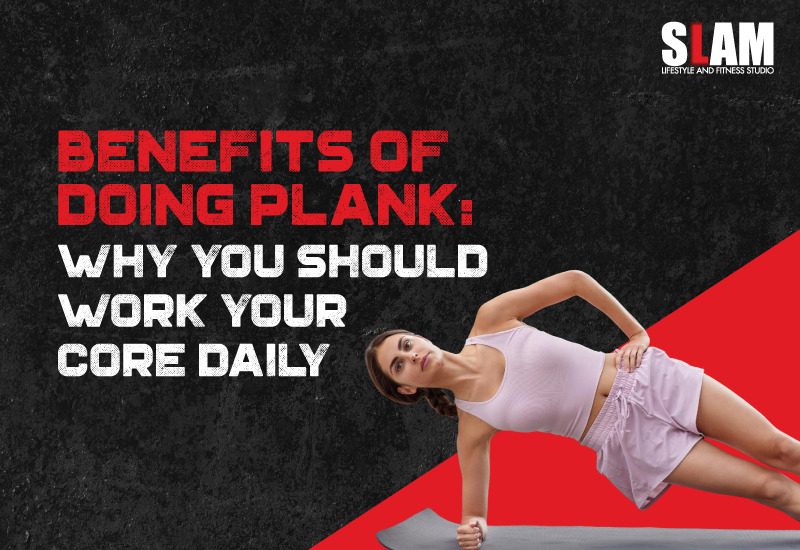
A powerful foundation is the core of total fitness, stability, and posture. Simple, interactive, mind-boggling. One of the best exercises you can do for your core is the plank. Despite its simplicity, the plank offers a wide range of physical and mental benefits that go far beyond just abs. Whether you are a beginner or an experienced athlete, understanding the benefits of doing planks can transform your workout routine.
At Slamfitness, we emphasise exercises that are simple, efficient, and impactful. The plank is one such exercise requiring no equipment, minimal time, and providing maximum results when done consistently.
Quick Highlights: Benefits of Doing Plank
- Strengthens the core muscles
- Improves posture and spinal alignment
- Enhances balance and stability
- Reduces the risk of back pain
- Boosts overall functional strength
Why Core Strength Matters: Benefits of Doing Plank
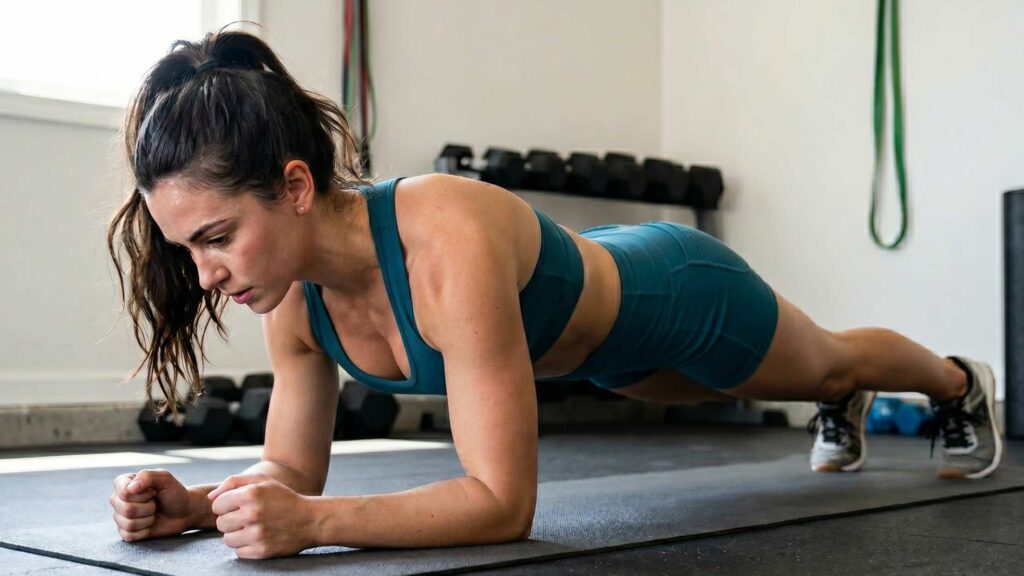
A strong core is not just about visible abs, as it is crucial for everyday movements, athletic performance, and injury prevention. Core muscles stabilise your spine, support lifting and bending motions, and maintain balance in dynamic activities. Plank exercises provide their most effective results because they activate multiple muscle groups at the same time. The incorporation of planks into your routine will provide you with all the essential advantages of planks, which include improved posture,d decreased strain on your lower back and increased total body strength.
Full-Body Engagement: Benefits of Doing Plank
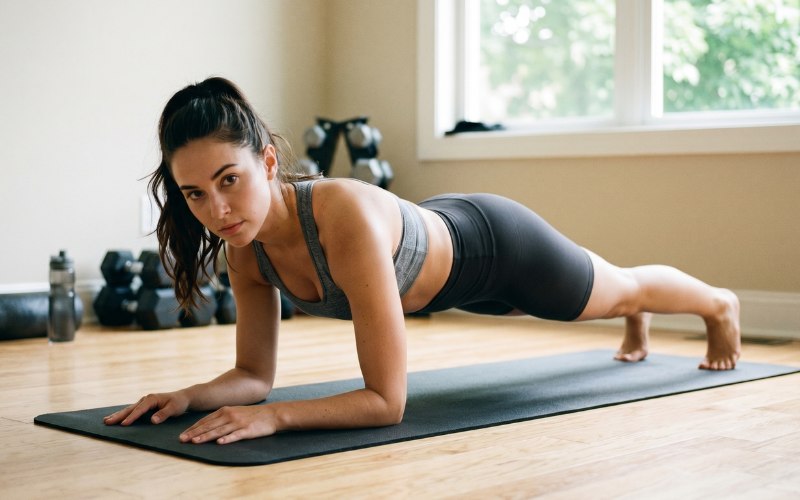
Planks function as a compound exercise that activates several muscle groups at once. Beyond the rectus abdominis (your “six-pack”), planks engage:
- Obliques
- Lower back muscles
- Shoulders and arms
- Glutes and legs
This full-body engagement is why fitness experts often recommend planks as part of daily workouts. Those exercises that target a specific area, like crunches or sit-ups, develop a stable grounding for the whole body in the case of planking.
Improves Posture and Spinal Health
People these days often have bad posture because they are leading a sedentary lifestyle. Slouching results in back pain and spinal misalignment, which develops into long-lasting musculoskeletal problems. One of the biggest benefits of doing planks is improved posture. By strengthening the core and stabilising the spine, planks help you stand taller, sit straighter, and move with better alignment in daily activities.
Enhances Balance and Stability
Balance is essential for all forms of physical activity, from walking and running to sports performance. The plank exercise targets deep stabilising muscles, which include the transverse abdominis and lower back muscles. The practice of planks helps you develop better balance control when facing moving challenges, according to research evidence, which supports their effectiveness in decreasing falls and improving coordination.
Reduces Risk of Back Pain
Lower back pain affects millions of people worldwide, often caused by weak core muscles or prolonged sitting. Plank exercises should be included in your workout routine because they work your abdominal muscles and lower back muscles. The process strengthens your spinal support system, which results in decreased physical stress and pain relief. The benefits of doing planks include decreased risk of chronic back pain and better spinal support over time.
Boosts Metabolism and Functional Strength
Planks function as more than a static workout because they engage various major muscle groups, which leads to increased energy consumption during the exercise. The activation of these muscles results in an increased metabolic rate, which enables you to burn additional calories during periods of inactivity. Planks develop functional strength, which people need for their daily tasks of lifting, carrying and bending, so they form a necessary element of complete body workout programs.
Mental Benefits of Doing Plank
Planks are not only physically challenging, but they also test mental endurance. Holding a plank for longer periods improves focus, resilience, and discipline. Incorporating planks into your daily workout routine provides the dual benefit of enhancing both body strength and mental toughness. For many fitness enthusiasts, this combination of physical and mental endurance is one of the most underrated benefits of doing a plank.
Variations of Plank for Maximum Benefits
To avoid monotony and target different muscle groups, try several plank variations:
- Forearm Plank: The exercise requires core concentration and lower back strength while it minimises wrist pressure.
- Side Plank: Engages obliques and improves lateral stability.
- Plank with Leg Lift: Strengthens glutes, hamstrings, and lower back.
- Plank to Push-Up: Combines upper-body strength with core engagement.
There are different methods of training which can help you achieve the maximum level of plank benefits while keeping workout excitement up.
Incorporating Planks into Your Daily Routine Planks
Planks allow people to practise anywhere because they need no equipment, which makes them perfect for daily training. Beginners should practise for 20 to 30 seconds per set before they start increasing their time. Experienced practitioners can maintain a plank position for at least one minute, or they can execute various plank alternatives, which make their training more challenging.
At Slamfitness, we suggest that people should perform planks together with bodyweight exercises and resistance training to develop a strong core, which will improve their entire fitness performance.
Common Mistakes to Avoid When Doing Planks
Even though planks are simple, incorrect form can reduce their effectiveness and risk injury:
- Dropping the hips too low or raising them too high
- Arching the back or rounding the shoulders
- Holding your breath instead of breathing steadily
- Overextending your neck or looking downward
The maximum benefits of plank exercises will be achieved through proper alignment, which should be combined with a gradual progression system, while joint strain will be minimised.
Slamfitness Studio Philosophy: Benefits of Doing Plank
At Slamfitness studio, we emphasise exercises that are simple, efficient, and impactful, and planks fit perfectly into this philosophy. They require minimal equipment and time while strengthening the core for functional, everyday movements. Planks also promote long-term spinal health and improved posture, and they enhance both physical and mental endurance. The clients who work with us should make core stability their main training focus because it serves as the essential component of their fitness programs, which will help them achieve long-lasting results.
Conclusion
The benefits of doing planks extend far beyond just sculpted abs. They focus entirely on core strength improvement, posture improvement, an increase in joint stability, reduction of back pain, and gaining functional strength. The basic yet effective exercise training develops three mental abilities: mental endurance, discipline, and focus.
Incorporating planks into your daily routine is an easy, effective way to improve overall fitness and long-term health. At Slamfitness, our exercise program uses scientific evidence to endorse the plank exercise as a fundamental training method for our clients to achieve long-term results.
FAQs
1. How long should I hold a plank daily?
Beginners can start with 20-20 seconds per set and gradually increase to 1-1 minutes as they become stronger.
2. Can planks reduce belly fat?
While a solid plank usually helps you to improve your core, some cardio helps you to lose body fat in general.
3. Are side planks more effective than regular planks?
In direct reference to obliques, lateral stability in this exercise would enhance whole core development as well as complement planks.
4. How often should I include planks in my routine?
Depending on the overall workout routine and active recovery, plank exercises can be performed either daily or 4 to 5 times a week.
5. Can planks help with back pain?
Yes, planking to build core muscles helps to improve spinal support and hence prevent and lessen the chances of back pain in the lower region, raising a voice in the head.
6. Do planks improve posture?
Absolutely. The muscles that support your spine develop strength through regular plank exercise, making it easier for you to maintain correct posture during the entire day.
7. Can planks be done at home without equipment?
Yes, planks require no equipment and can be performed anywhere, making them perfect for home workouts.