Introduction
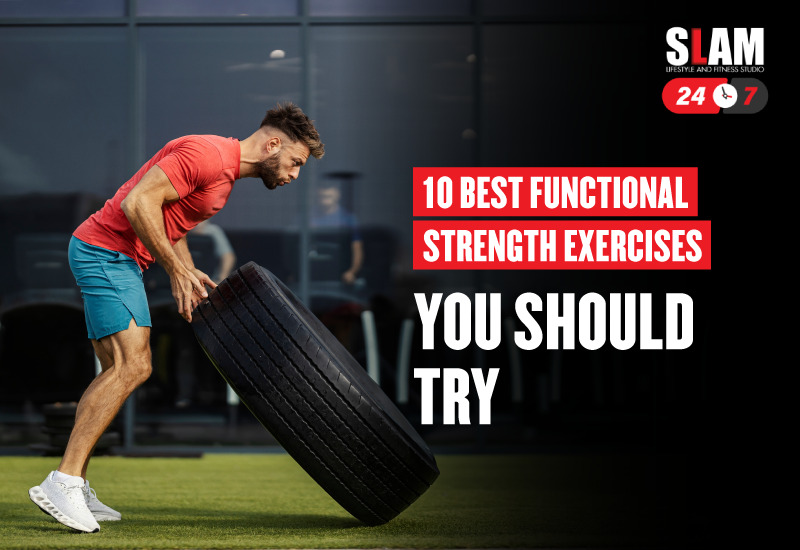
Have you ever wondered why some sports or exercises help you to appear powerful but not always feel powerful? Then, functional training is your solution. These types of strength exercises make your body more functional and are activities that directly improve your performance in real life, such as carrying groceries, climbing stairs, or sports at the weekend. This blog deconstructs the 10 most effective functional strength exercises that can be used to build real-world strength, increase mobility and decrease risk of injury, and for a workout that is both enjoyable and interesting.
If anyone understands true functional strength, it’s a Navy SEAL – especially DJ Shipley. After operating at the highest physical and mental levels imaginable, and collecting more than a few injuries along the way, he’s built a training philosophy that has nothing to do with aesthetics and everything to do with long-term resilience.
The 10 Best Functional Strength Exercises To Try
1. Squat to Press (Thruster)
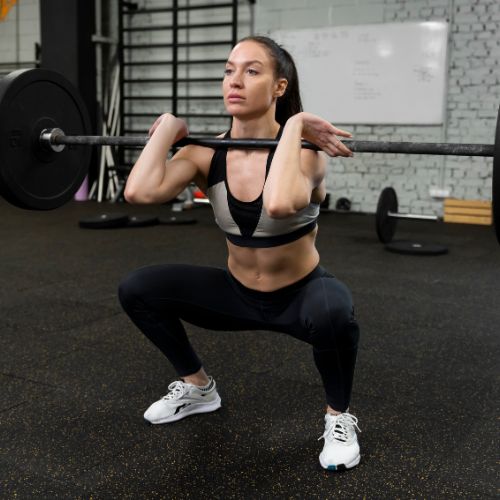
This exercise is a complete workout, which infuses the lower-body strength with upper-body force in a single move.
Why It Works
This movement is a reflection of real-life activities, such as lifting a mass off the ground and overhead, and is one of the most useful strength builders.
How It’s Done
- Hold a dumbbell in each hand at your shoulder level with your elbows slightly forward as if you are ready to push something up.
- At that position, clench your core and lower your body for a squat.
- Push through your heels and at the same time press the weights overhead with one smooth, powerful motion as you return to your standing position.
| Functional BenefitThis exercise educates the body to function as a single entity. It develops the strength of the whole body, enhances the ability to coordinate and balance, and the heart rate feels the impact quite quickly |
2. Kettlebell Swings
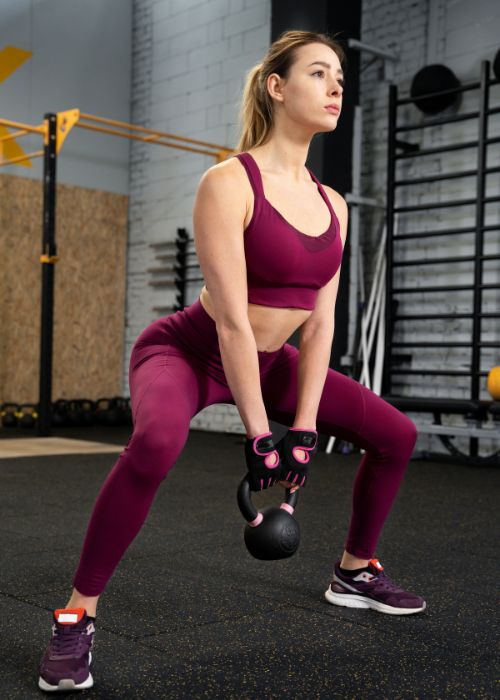
Kettlebell swings are the epitome of functional fitness movement. By means of a very strong hip hinge, the kettlebell is swung forward with strength—not with the arms—then it is allowed to flow back in between the legs before the next repetition.
Why It Works
This practice develops correct hip-hinge technique, needed to lift, run and bend painlessly as well as produce force efficiently.
How It’s Done
- Keep your back straight.
- Press your hips back as you would when you are closing a door.
- Bring your kettlebell, moving it as if you are swinging, towards your chest.
- Allow it to return smoothly.
| Functional BenefitIt works on the glutes, hamstrings, and lower back and increases endurance. |
3. Farmer’s Carry
This exercise is easy, efficient, and very convenient. The farmers can be transferred into your daily life.
Why It Works
This is similar to some of your activities, such as carrying your luggage or groceries, which need you to use your strength in your grip and your body position and stability in your core.
How It’s Done
- Carry erudite dumbbells or kettlebells on your sides.
- Take small and slow strides and stand up straight.
| Functional BenefitEnhances grip, posture, core strength and body balance. |
4. Deadlift
The deadlift is one of the most basic functional exercises, and it provides strength that is transferred to real life.
Why It Works
It targets the posterior muscles – glutes, hamstrings and spine stabilisers, which are important in safe lifting and protection of the back.
How It’s Done
- Maintain a normal back and chest position.
- Use your hips and heels to press upwards and raise the weight.
| Functional BenefitEnhances correct lifting technique and minimises the occurrence of daily injuries. |
5. Push-Up Variations
An exercise that builds strength, stability, and control of the muscles, and is an eternal bodyweight exercise.
Why It Works
Push-ups exercise the chest, shoulders, arms, and core, as well as improving the shoulders and trunk strength.
How It’s Done
- You are required by rule to maintain a straight plank-like body from head to heels.
- One should lower the chest to the floor and then push back up.
| Functional BenefitDevelops the strength and integrity of the shoulders and muscles. |
6. TRX Rows
A pulling movement that is in suspension form and builds the upper back, and enhances posture.
Why It Works
TRX rows will reverse the effect of increased sitting and assist in returning to a good posture and pushing power.
How It’s Done
- Take the handles and bend them backwards.
- Tug your chest in the direction of the handles whilst holding your shoulder blades together.
| Functional BenefitBuilds upper-back muscles needed to lift, pull and move efficiently in day-to-day activities. |
7. Lunge With Rotation
An active movement that provokes the sense of balance, strength and core control.
Why It Works
It develops unilateral strength and learns the core to stabilise when in rotational movement.
How It’s Done
- Lunge forward
- Carefully turn your torso to the front leg.
| Functional BenefitIncreases stability, perfects balance and regulates movement coordination. |
8. Medicine Ball Slams
This exercise is a high-power workout which drains a lot of energy and can develop power and coordination.
Why It Works
Slams achieve speed, production of force and mobility of joints as they utilise the whole body.
How It’s Done
- Take the ball with the extended arms
- Swing it as much as possible on the top and hammer the ground with it.
| Functional BenefitIncreases explosive strength, athletic ability and coordination of the entire body. |
9. Plank To Push-Up
This exercise is known for its balance. It increases the balance by incorporating core balance into it. It balances between body power and stability.
Why It Works
The continuous movement of the body weight stabilises the core, and the shoulders and arms become stronger.
How It’s Done
- Start in a forearm plank
- Push yourself up into a push-up position
- Then slowly lower back down to the forearm plank.
- Repeat the movement with control.
| Functional BenefitEnhances core, shoulder and endurance of posture. |
10. Box Step-Ups
An incredibly portable workout that strengthens real-life legs. This is kind of like climbing steps or anything inclined higher.
Why It Works
Step-ups mimic daily activities, such as walking up the steps or stepping on higher platforms, which can be a glute burner.
How It’s Done
- Put one foot firmly on a strong step or box.
- Raise your body onto the box, push through your heel.
- Step back down.
- Repeat it with the other leg and repeat it as a whole.
| Functional BenefitBuilds quads, butt, and core and increases one-leg balance. |
Functional Strength Exercises: The Quick Breakdown Guide
| Category | Suggested Exercises |
| Lower Body Power | Squat to Press, Step-Ups |
| Core Stability | Plank to Push-Up, Lunge with Rotation |
| Strength | Swinging Kettlebell, Ball Slams |
| Daily-Life Strength | Farmer’s Carry, Deadlift |
| Posture & Pulling | TRX Rows, Push-Up Variations |
The Importance Of Functional Strength Exercises
Real-Life Carryover
Functional strength workouts, unlike machine-based ones, are easy to transfer to normal day movements such as bending, lifting, twisting and carrying.
Injury Prevention
They stabilise the joints, make the connective tissues stronger and promote proper movement patterns.
Improved Athleticism
Regardless of whether you are running, jumping or playing recreational sports, these activities will develop total-body control.
SLAM Fitness: Your Shortcut To Stronger
At SLAM Fitness, we are convinced that training must make you a better person in life, not only in the gym. We are also one of the unisex gyms that are best in Chennai, and we work to ensure that you can move and feel better through functional, smart and sustainable workouts. We develop programs that have functional strength exercises that improve daily performance. Likewise, we train with focus, growth and enthusiasm.
Conclusion
Strength training is not only about lifting weights, but rather it is a process of training your body to work well in everyday life. By incorporating the above 10 best exercises for functional strength in this video, you will have the ability to provide yourself with the tools necessary to enable you to create and provide a solution that gives you the strength of mobility, strength of power, strength of balance, and strength of long-term resilience. Begin with little, be steady and see the manifestation of your life in the power of the real world.
FAQs On Functional Strength Exercises
What constitutes a functional exercise?
Functional exercises are the ones which are similar to real-life situations, for instance, pushing, pulling, squatting or rotating. They enable you to do the work around the house without any problem.
What is the frequency of functional strength exercises?
A frequency of 2-4 times/week is the best to achieve significant changes in strength, balance and mobility.
Should I be provided with equipment to carry out functional training?
Not always. There are some exercises like push-ups, lunges and planks which can be done only with your own body weight; however, you may use kettlebells or dumbbells to add variation.
Can functional strength training be made attractive to beginners?
Absolutely! It suits people of all levels; beginners can also take advantage of functional strength training exercises, which are considered achievable.
Are these exercise programs going to help with weight loss?
Definitely! This series of workouts acts as an efficient fat burner by focusing on and burning calories.